What do we do?
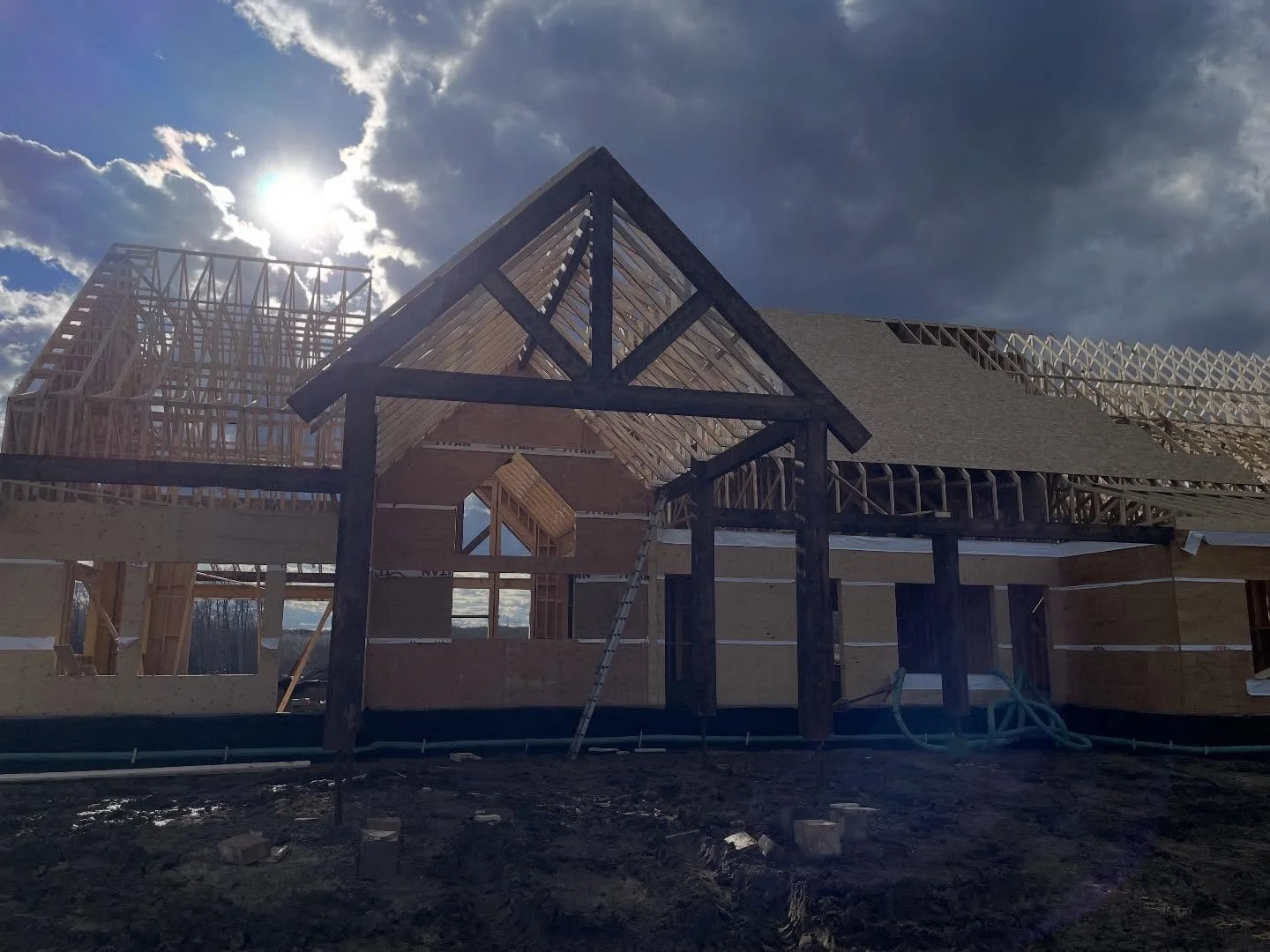
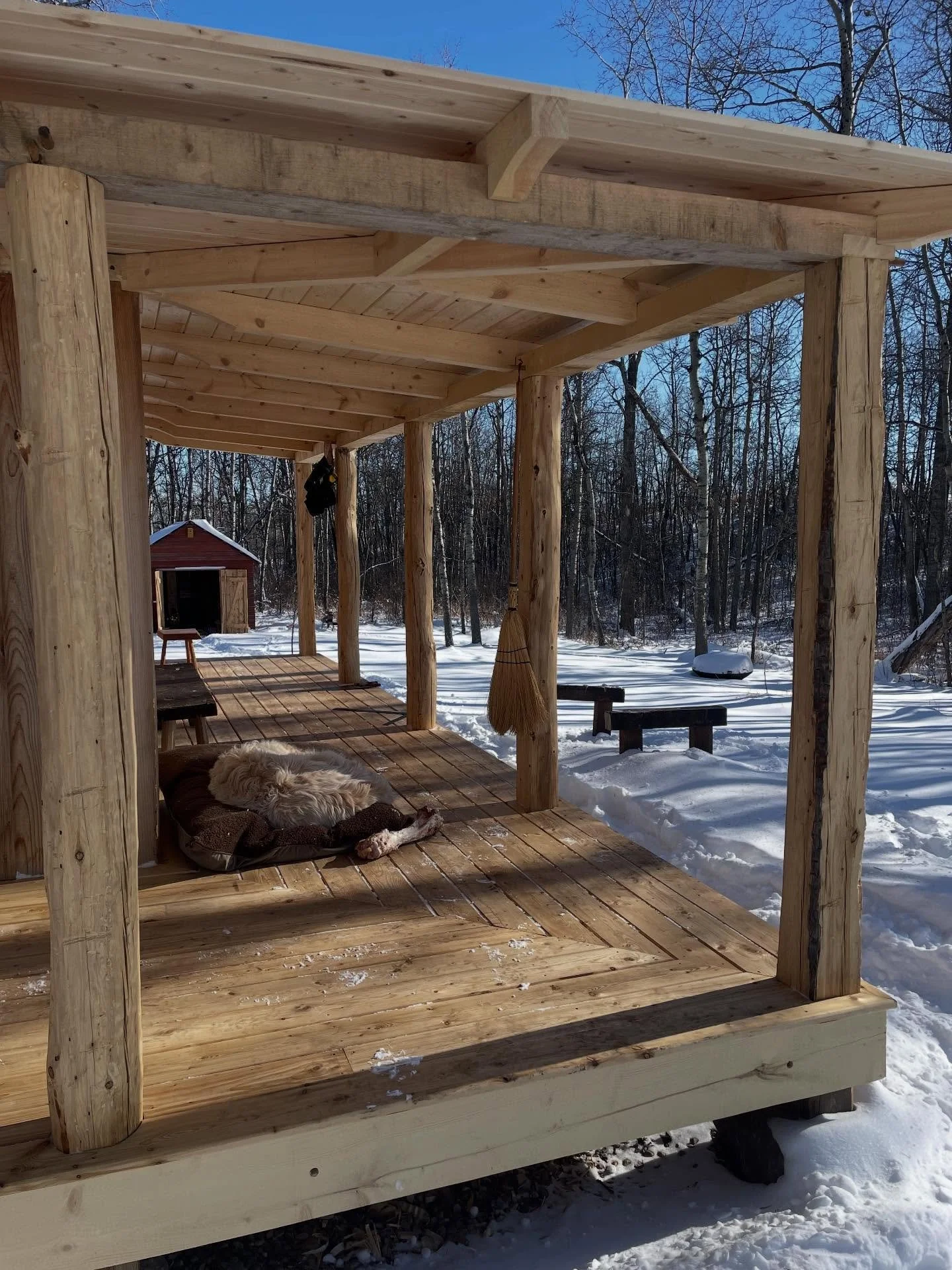
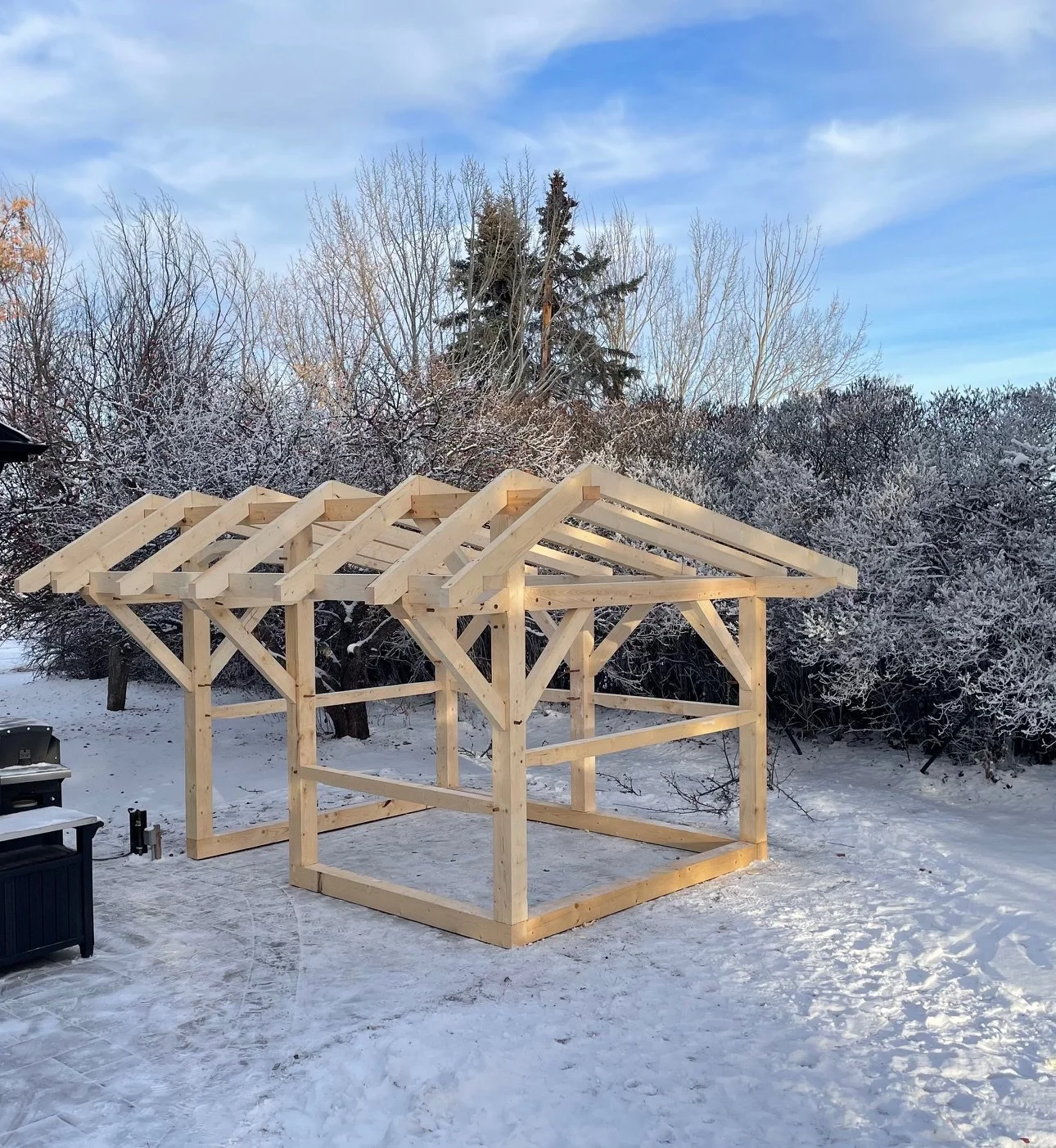
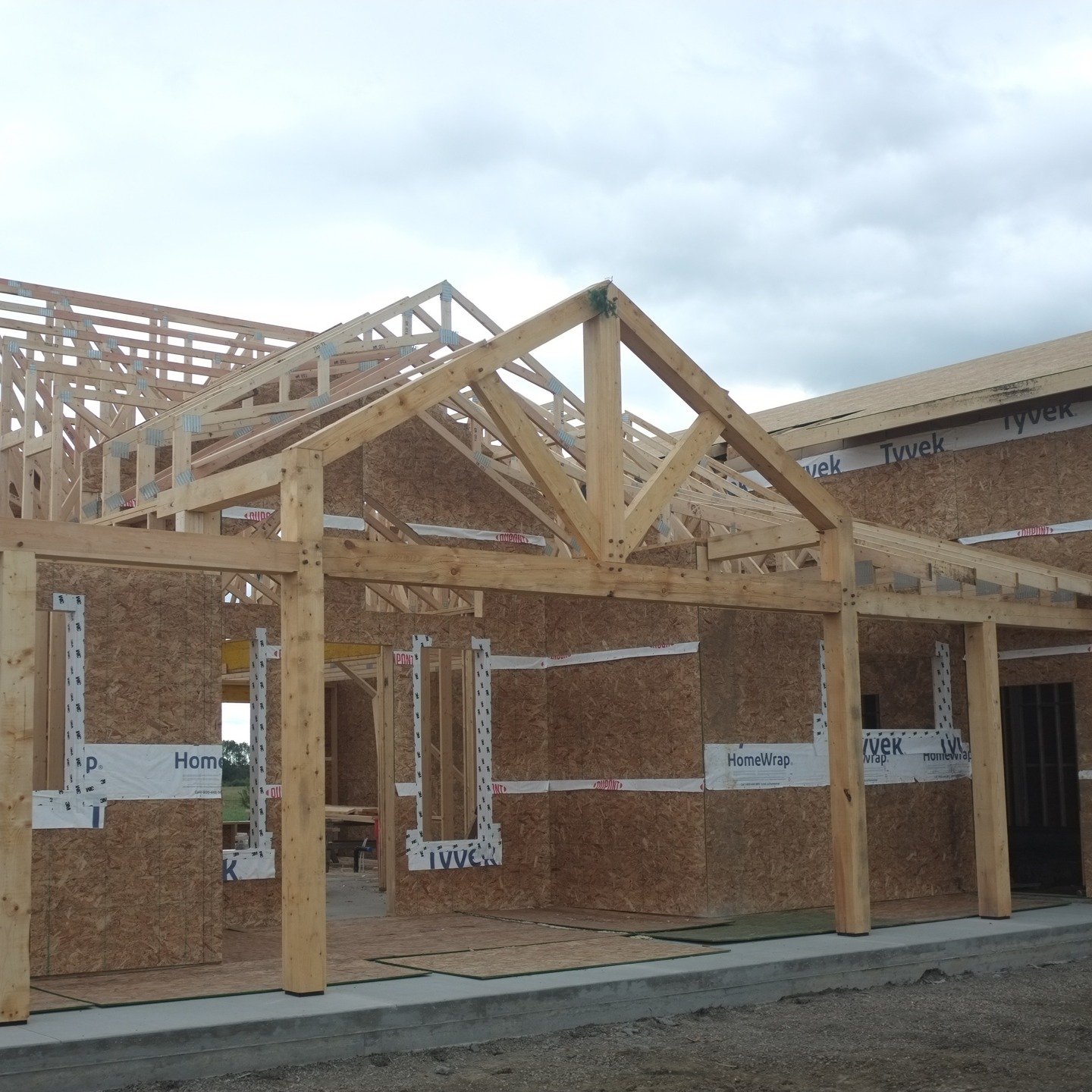
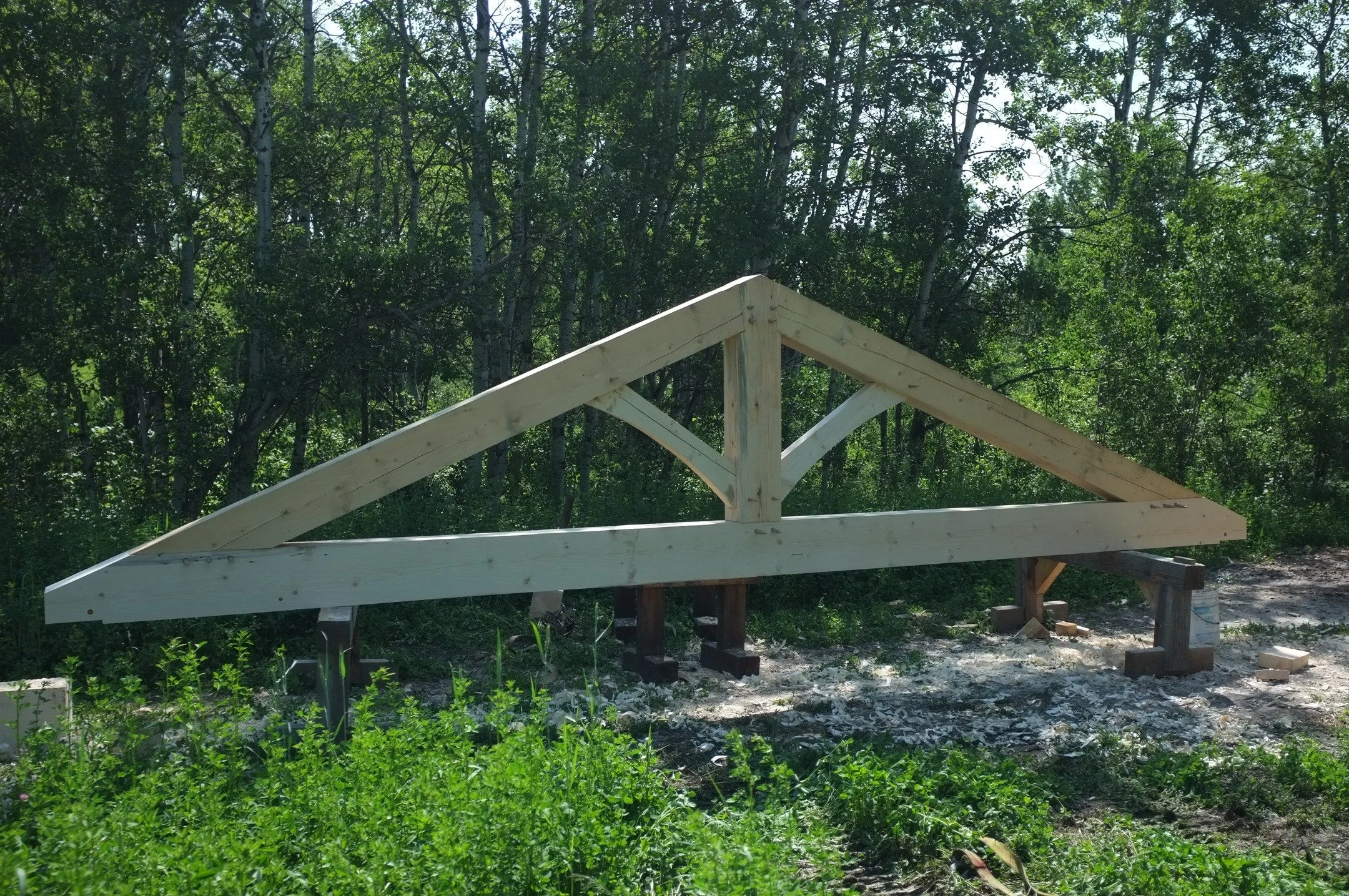
Serviceberry Timber Frames offers custom timber frame design and construction services. We are excited to take on projects big and small, from garden sheds, woodsheds, pergolas, arches, gates and porches to fully-finished cabins and barns. Our work is made with great attention to craftsmanship and vernacular tradition.
Our mission is to share our passion for timber framing and to do our small part in creating spaces that inspire and better connect people to their homes, properties and the natural world. Timber frames, shaped by human hand and natural materials, radiate a sense of warmth, individuality and timelessness that we believe is often lacking in modern home design. Our style has been greatly influenced by centuries-old timber framing traditions on the eastern seaboard of the United States and Europe.
Please feel welcome to browse our portfolio to see some of our past work.

What is timber framing, and why are we so passionate about it?
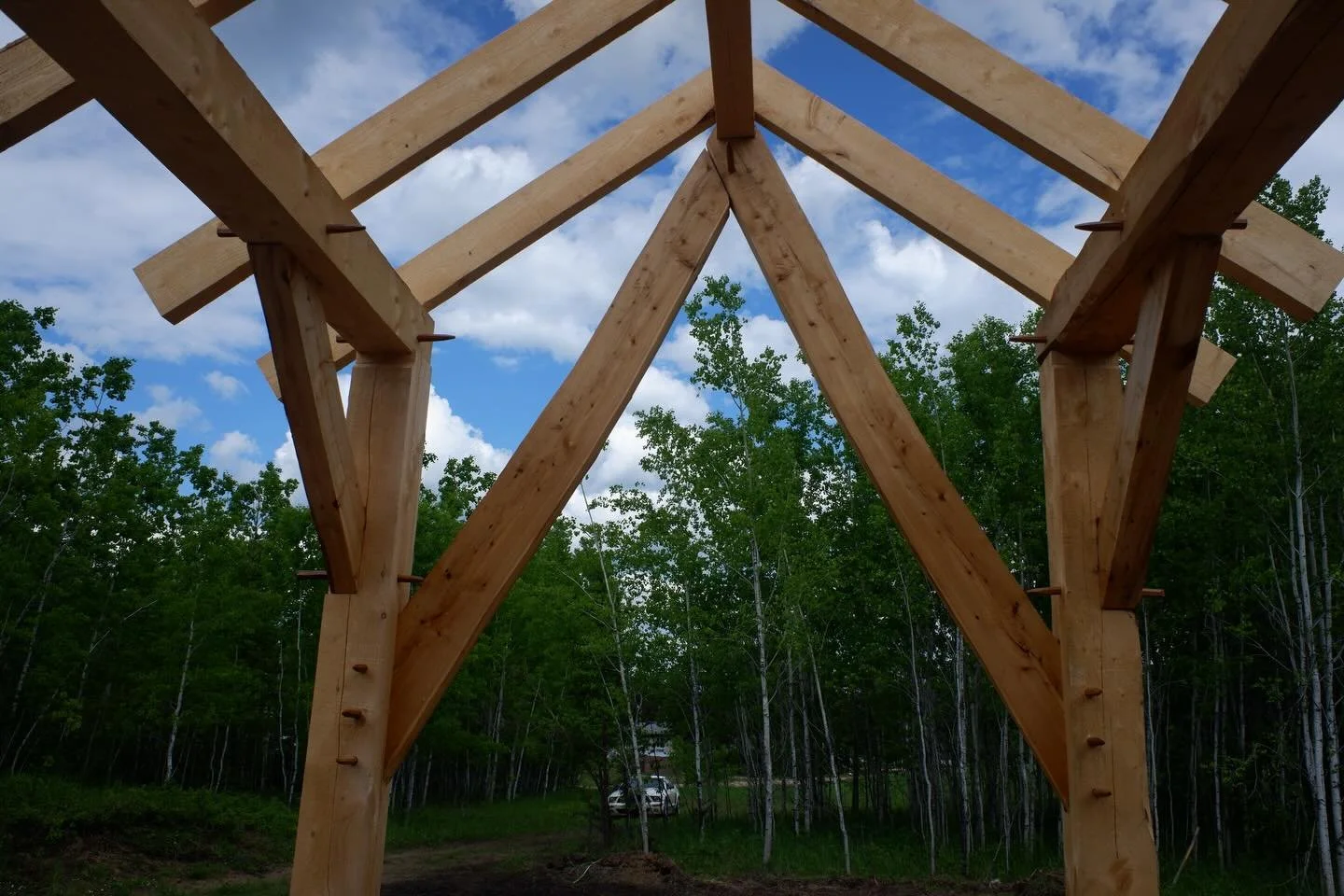
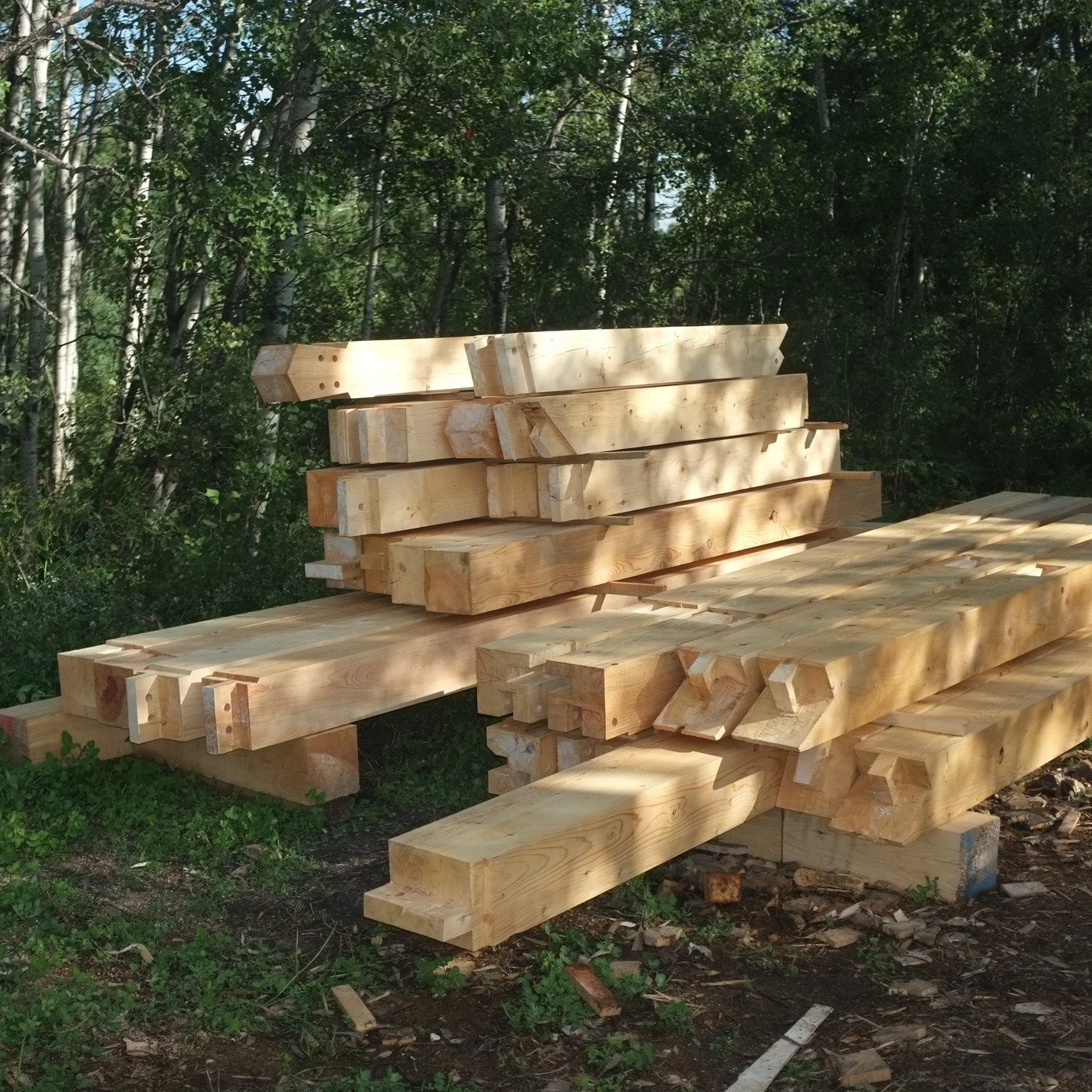
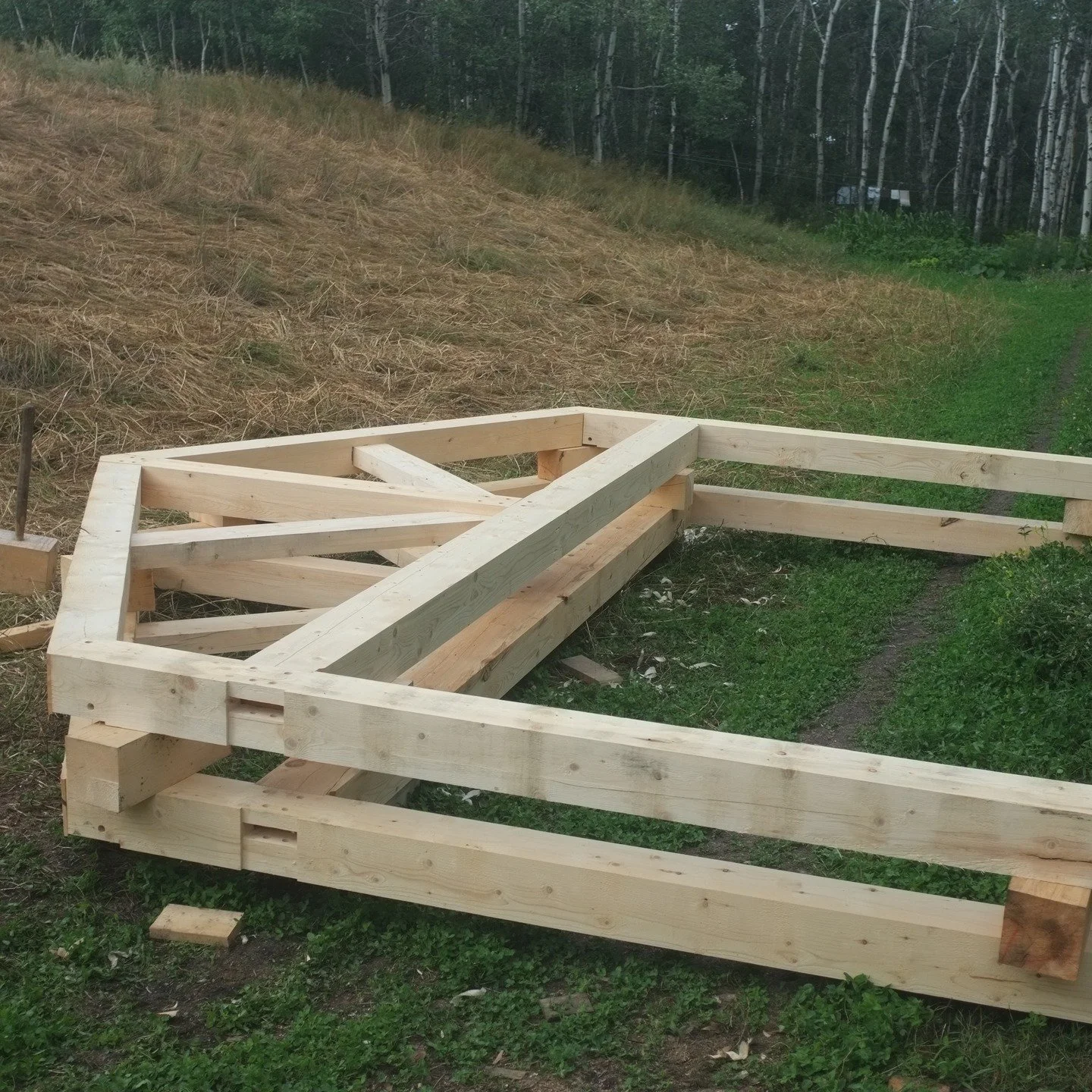
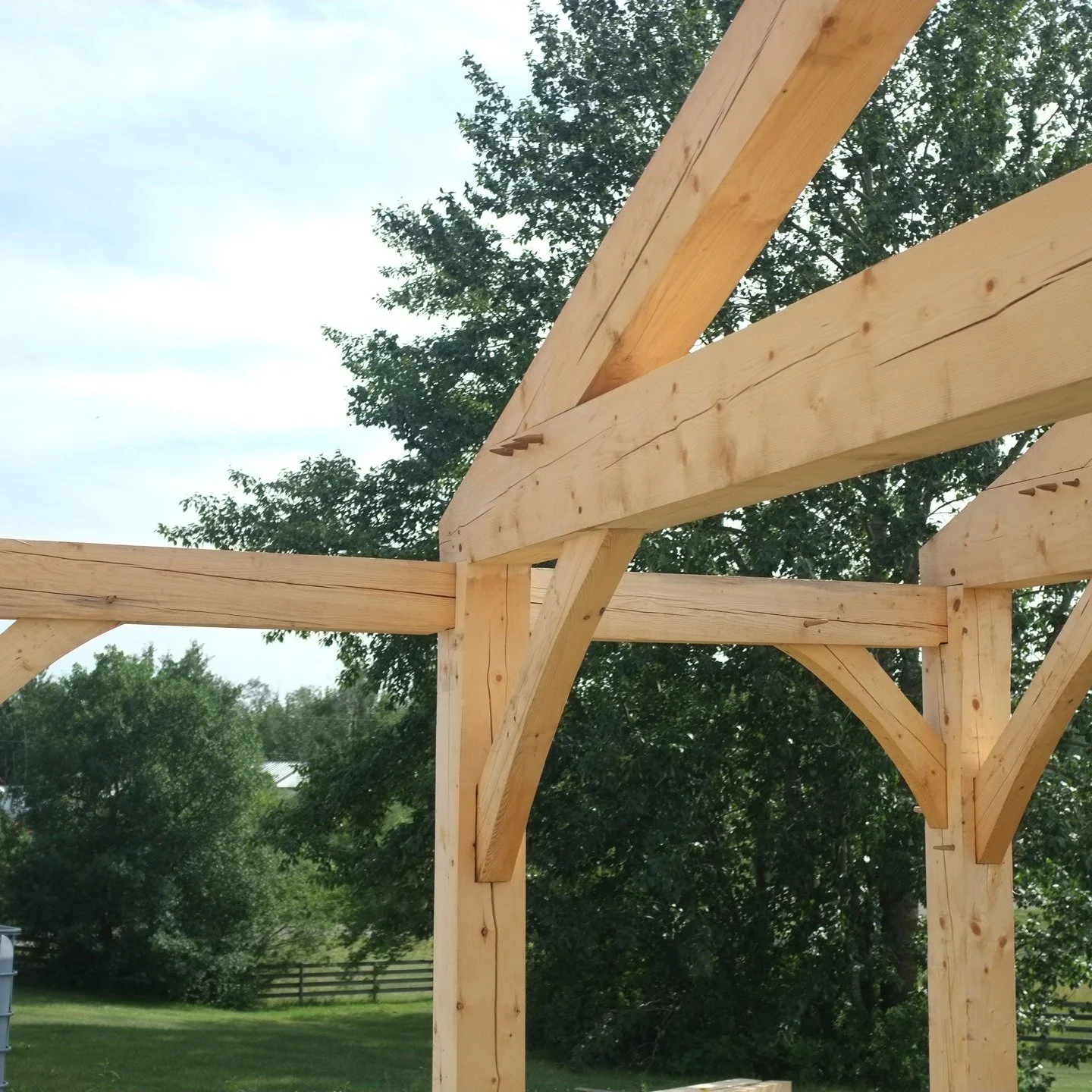
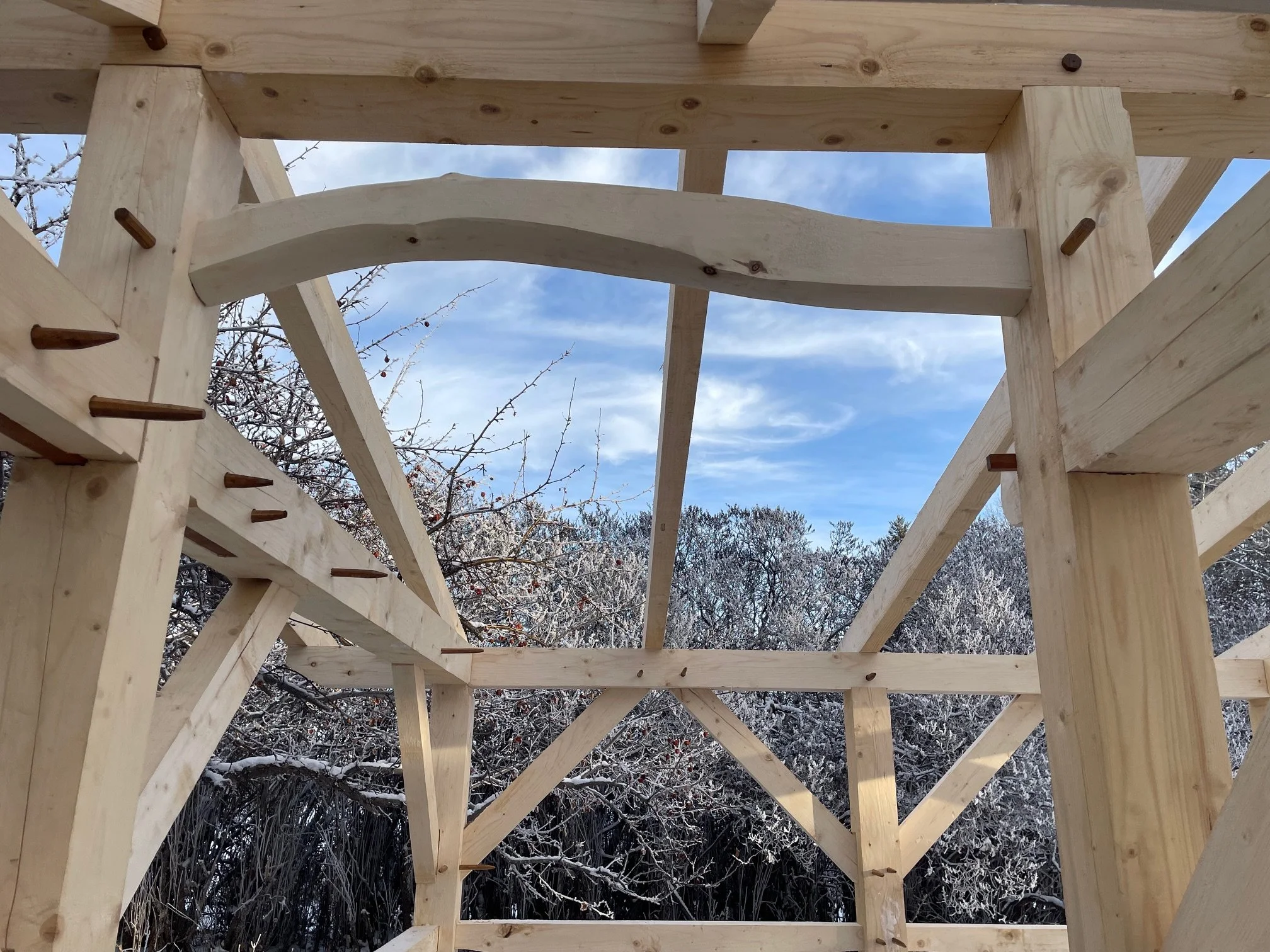
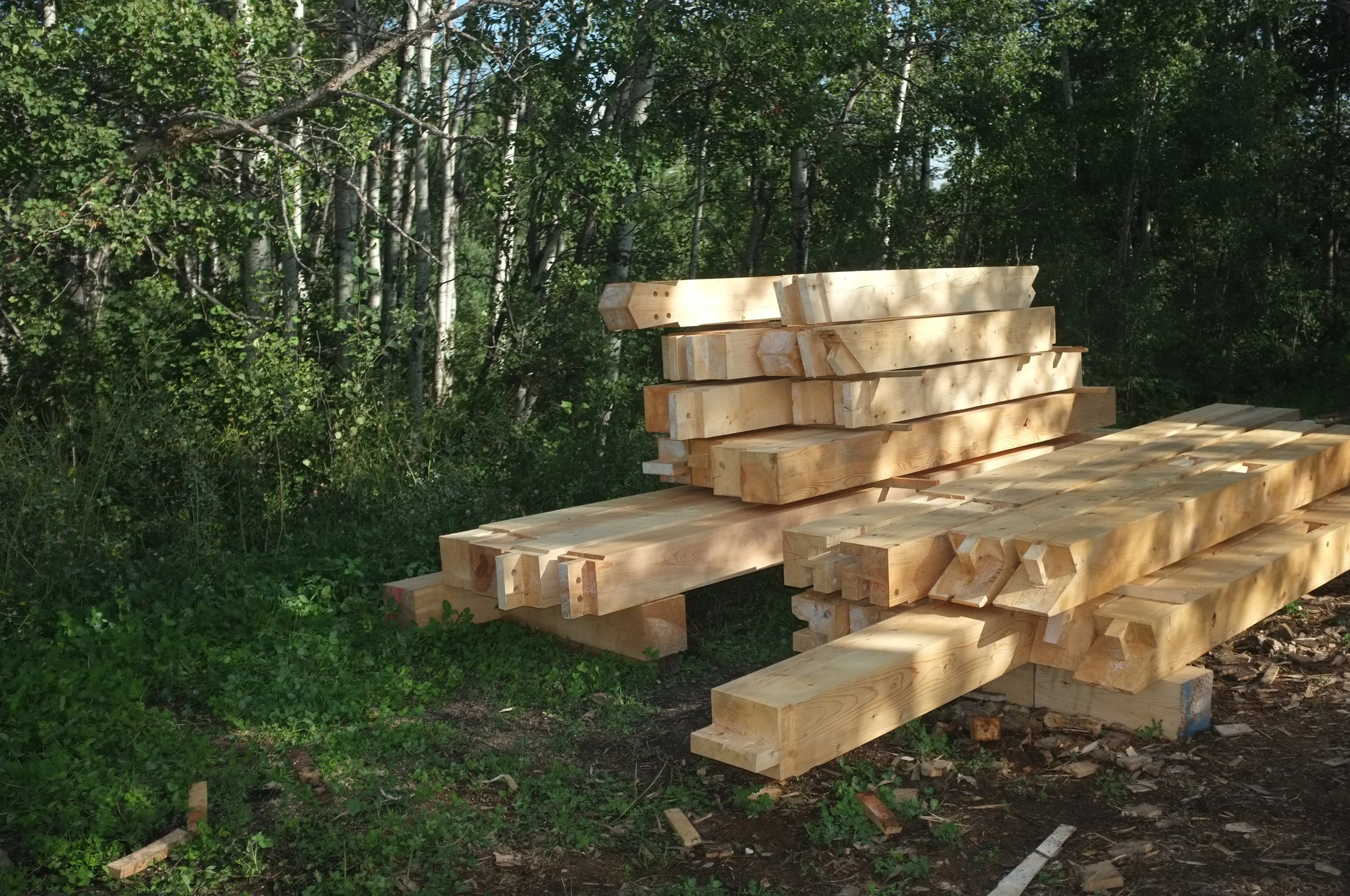
Timber framing is the ancient technique of joining large pieces of wood together using mortise and tenon joinery, joining two pieces of wood without the use of modern fasteners. Mortise and tenon joinery creates a strong natural connection between two pieces of wood, rather than relying solely on metal fasteners.
Timber framed buildings are incredibly strong as soon as they are assembled, and don’t require additional sheathing and bracing to prevent them from racking as conventional stick frame builds do. As a result, a timber frame, whether it is a small shed or massive barn, has an innately secure and comforting presence due to the strong, skeletal nature of its construction.
Traditional mortise and tenon timber framing is a practical tradition that is meant to be cultivated. Honest structures built with natural materials, using time-proven techniques, have an inherent and intentional beauty to them that we usually associate with heritage homes. Nothing about timber frame construction feels cheap or flimsy.
Timber frames stand the test of time and develop more character as they age. Though it’s seen a niche building technique now, once we know what to look for we can see timber framing commonly present in historical architecture, from the famous Notre Dame Cathedral in France to traditional English Tudor-style cottages and the still standing 12th- and 13th-century timber framed houses in cities across Western Europe.
Timber framing requires a degree of care and attention to detail in our built environment that brings endless potential for beauty, individuality and meaning into our homes.
Where do our materials come from?
Our timber frames are proudly made with Alberta-grown Western spruce and/or Lodgepole pine, and sawn by a local sawyer who we work closely with. We’re happy to accommodate special requests for lumber (i.e., you love pine and prefer it for your timber frame) when we have enough lead time to ensure stock.
Sourcing our lumber from an independently-owned business located right here in central Alberta supports our local economy and greatly reduces the distance your lumber needs to travel from forest to frame.
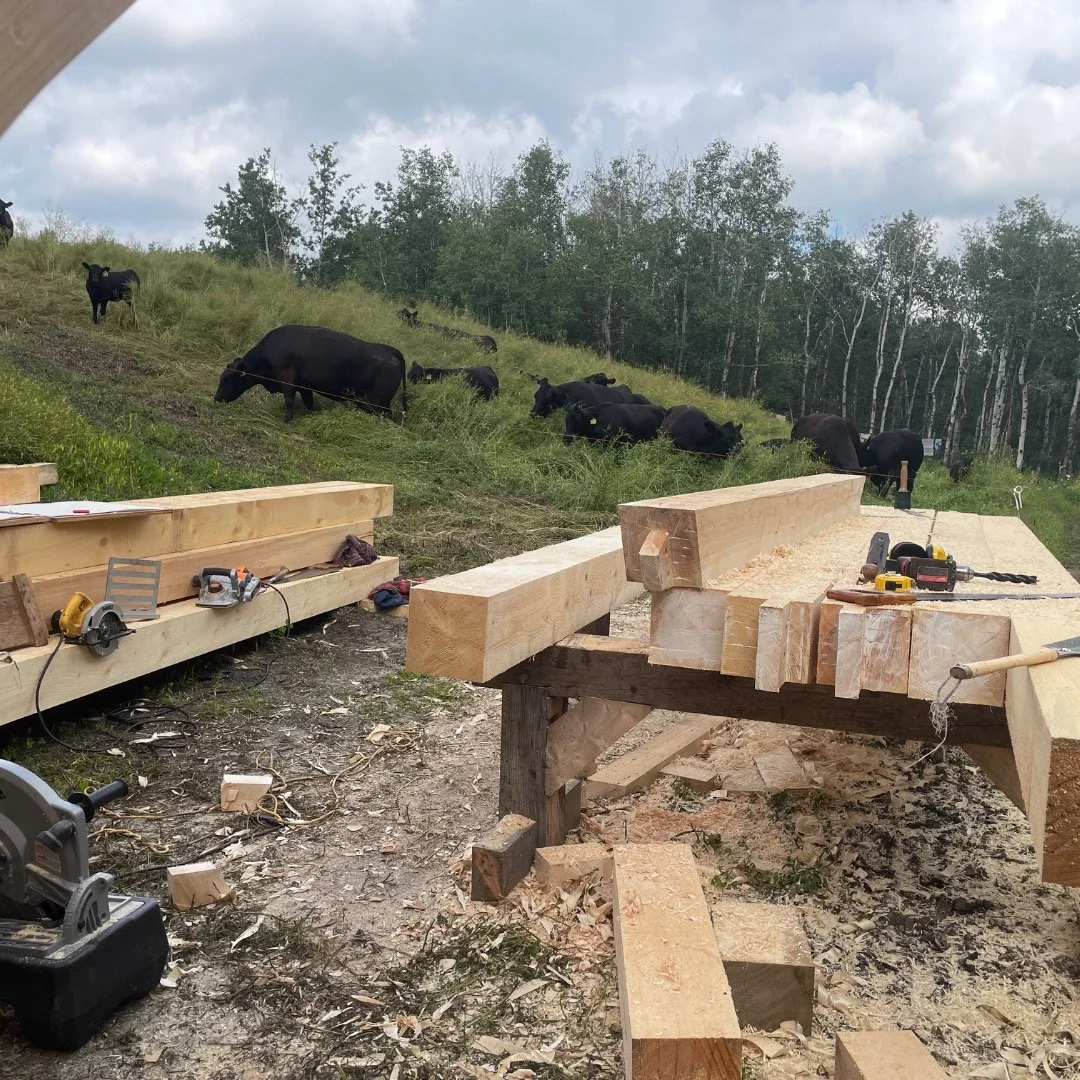
Our construction methods generate much less waste than the conventional construction industry, and we prepare our frames at our workshop. Any waste created by timber framing is biodegradable and gets put to use; discarded off-cuts from our frames are used to heat our home during the winter months.
All joints are secured with hand-carved oak pegs.
What can you expect from our design and building process?
Our building process starts with a free consultation to get an idea of what you are interested in and how we can design a timber frame that works best for your needs. We draft a timber frame design and provide a quote.
If the design is approved by our clients, we proceed to acquire materials and make the timber frame at our home-based workshop near Bashaw, AB. If needed, we will contact an engineer at this step of the process to get official approval for our design. This ensures our designs have engineer-approved structural integrity and meet local building codes. We cut the frame at our shop and then deliver and assemble once all the joinery is complete. We dry-fit our frames as a final step before we bring them to site.
We transport our timber frame to site in pieces, and then assemble it in a matter of days (one day is typical, or a few days for larger and/or more complex projects). Traditionally, timber frames were cut and assembled by carpenter/s and then raised by a community in one day. We’ve had the pleasure of continuing this tradition with friends and clients and are always excited to have our clients take part in this rewarding stage of the project if they wish.